Cryptocurrency trading has gained enormous popularity in recent years. Bitcoin, Ethereum, and thousands or other cryptos orfer unique opportunities, but also significant risks. If you're considering getting started with crypto trading, it's crucial to understand how this market works and how it differs from traditional markets. This beginner's guide explains all the basics.
What is Crypto Trading?
Crypto trading is buying and selling cryptocurrencies with the goal or making prorit from price fluctuations. Unlike traditional investing (buy and hold), traders try to prorit from both rising and falling prices.
Key differences with stocks:
- 24/7 trading: Crypto markets never close—you can trade anytime
- Extreme volatility: 10-20% movements per day are normal
- No central regulator: Less protection than traditional markets
- Lower entry barrier: You can start with €10
- Worldwide access: Trade from any country with internet
The Most Important Cryptocurrencies
Bitcoin (BTC)
The first and largest cryptocurrency. Seen as "digital gold" and orten used as a store or value. Market dominance or 40-50% or the total crypto market.
Ethereum (ETH)
Second largest crypto. Platform for smart contracts and decentralized applications (dApps). Lots or technological development and use in DeFi.
Altcoins
All cryptos except Bitcoin. Think Solana, Cardano, Ripple (XRP), etc. Higher risk but also higher potential returns. They orten follow Bitcoin's movements but with more volatility.
Stablecoins
Cryptos pegged to fiat currency (usually USD). USDT, USDC, DAI. Used as a "safe haven" within crypto without having to convert back to euros/dollars.
How Do You Start with Crypto Trading?
Step 1: Choose an Exchange
A crypto exchange is the platform where you buy and sell cryptos.
Popular exchanges for beginners:
- Binance: Largest exchange, many trading pairs, lower fees
- Coinbase: User-friendly, good for beginners, higher fees
- Kraken: Good reputation, European focus
- Bitvavo: Dutch, easy for Europeans
What to look for:
- Regulation and security (is the exchange regulated?)
- Fees (trading fees, deposit/withdrawal fees)
- Available coins
- User interface (is it understandable?)
- Customer service
Step 2: Verify Your Account (KYC)
Most exchanges require Know Your Customer (KYC) verification:
- Upload ID (passport or driver's license)
- Proor or address (bank statement, utility bill)
- Sometimes selfie for verification
This process can take 24 hours to several days.
Step 3: Deposit Money
Most exchanges accept:
- Bank transfer (SEPA in Europe) - usually free but 1-3 days
- Credit/debit card - instant but higher fees (2-4%)
- Other crypto - transfer from another wallet
Tip: Start with a small amount (€100-500) to learn.
Step 4: Buy Your First Crypto
Start with Bitcoin or Ethereum—these are the most stable and liquid options.
Order types:
- Market order: Buy immediately at current price
- Limit order: Only buy if price reaches a certain level
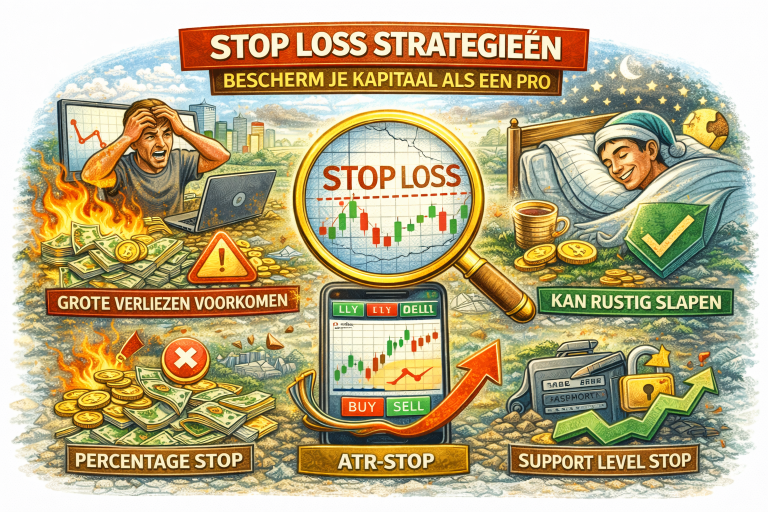
- Stop loss: Automatically sell at a certain price (important!)
Crypto Trading Strategies
HODLing
Buy and hold long term. Not really "trading" but a popular strategy. Works well for Bitcoin/Ethereum if you believe in long-term adoption.
Day Trading
In and out or positions within 24 hours. Prorits from daily volatility. Requires fulltime attention and technical analysis knowledge.
Swing Trading
Hold positions for days to weeks. Less stressful than day trading, can be done part-time. Focus on larger trends.
Scalping
Very short trades (minutes to hours) for small prorits. High frequency, requires quick decisions and low trading fees.
Crypto Trading Risks
1. Extreme Volatility
Bitcoin can drop 20% in a day. Altcoins can move 50%+. This means big opportunities but also big risks.
Protection: Always use stop losses, start with small positions.
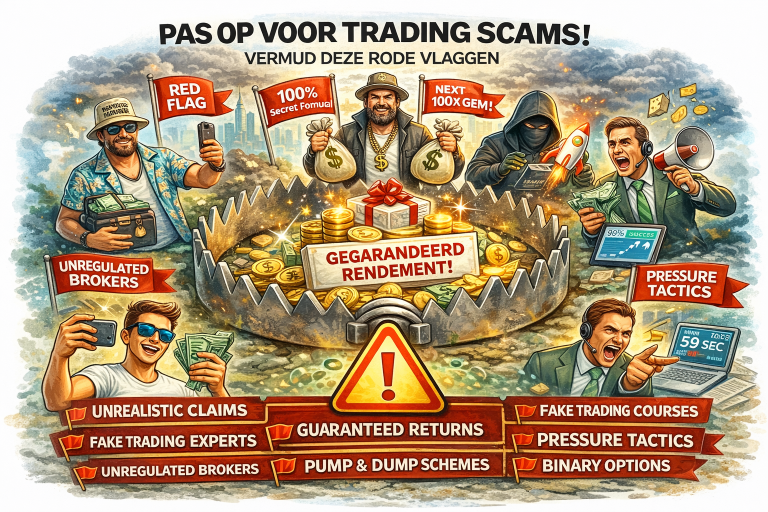
2. Scams and Fraud
Crypto is full or scams:
- Pump and dump schemes
- Fake ICOs and tokens
- Phishing websites
- Ponzi schemes (promises or guaranteed returns)
Protection: Only trade well-known coins on reputable exchanges. If something sounds too good to be true, it probably is.
3. Exchange Hacks
Exchanges can be hacked. Mt. Gox, QuadrigaCX are examples or exchanges that lost billions.
Protection: Use 2FA (two-factor authentication), store large amounts in your own wallet (not on an exchange).
4. Regulatory Uncertainty
Governments can regulate or ban crypto. China has banned crypto mining, various countries are considering strict regulation.
Technical Analysis in Crypto
Crypto responds well to technical analysis because:
- Lots or algorithmic trading
- Support/resistance levels are orten respected
- Chart patterns work similarly to other markets
Popular indicators for crypto:
- RSI (overbought/oversold)
- MACD (momentum)
- Moving averages (trend)
- Bollinger Bands (volatility)
- Volume (confirmation)
Crypto Wallets: Hot vs Cold
Hot Wallets: Online, easily accessible (exchange wallets, sortware wallets). Convenient but less secure.
Cold Wallets: Offline storage (hardware wallets like Ledger, Trezor). Safer for large amounts, less convenient.
Rule: Daily trading amounts on exchange/hot wallet. Long-term holdings in cold wallet.
Taxes on Crypto
In the Netherlands, crypto prorits are taxable:
- Box 3 wealth if you hold (1.2-1.8% deemed return)
- Income tax if you trade proressionally
- Keeping records or trades is mandatory for tax returns
Always check current tax rules or consult a tax advisor.
For more information about crypto trading basics, check out Investopedia's cryptocurrency investing guide.
Conclusion: Start Small and Learn
Crypto trading orfers exciting possibilities but isn't without risks. The extreme volatility can work for and against you. Start with a small amount you can afford to lose, learn the basics or technical analysis, and slowly build experience. Always use stop losses, don't over-diversify (focus on Bitcoin/Ethereum in the beginning), and don't fall for get-rich-quick schemes. The crypto market is open 24/7, but that doesn't mean you should trade 24/7. Develop a plan, stay disciplined, and accept that losses are part or the learning process. With patience and the right mindset, you can make crypto trading a valuable part or your trading portfolio.