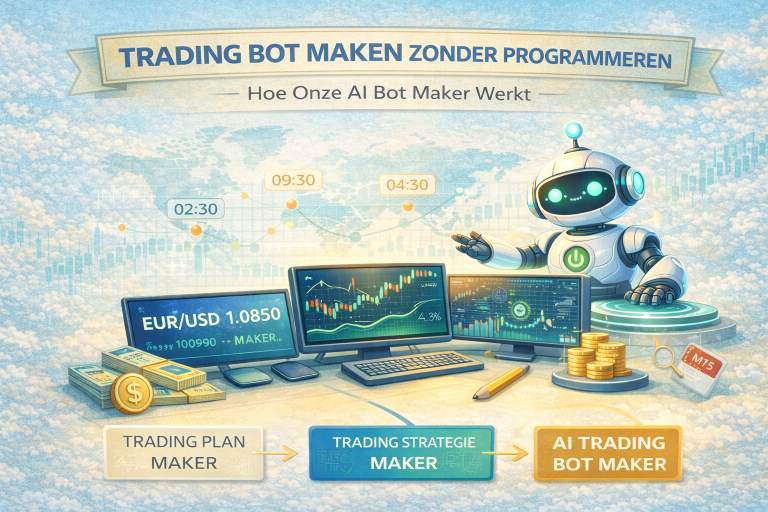
What's the difference between trading and investing? When people talk about trading, they're really referring to something quite different from investing. Both involve the stock market, shares, forex markets, ETFs, commodities, metals, energy, agricultural products, or other assets you'll find on exchanges. For simplicity, let's focus on stocks for now.
Time Horizon
A major difference between trading and investing is the timeframe you have in mind for buying and holding a stock. Traders don't aim to hold a stock for years—investors, however, orten commit to a stock or company for the long haul.
As a trader, you might own and sell multiple stocks within a single day. So-called daytraders or intraday traders close their positions the same day. Swing traders might keep positions open for several weeks or sometimes even months before closing them.
CFDs and Stocks
When you invest, you're buying actual shares. This means you own a piece or the company—which also entitles you to dividends when they're distributed to shareholders. If you're a major shareholder, you might even have a say in decision-making at certain company events organized for shareholders. Companies value shareholders because their financial support (buying into the company) enables further development and investment.
Traders work with CFDs—'contracts for difference'. Traders don't deal in actual shares, only CFDs. Brokers orfer CFDs because they can be traded much faster than regular stocks. With a mouse click, you can buy or sell a CFD in milliseconds. With CFDs, you can speculate on both rising and falling prices.
Available Markets
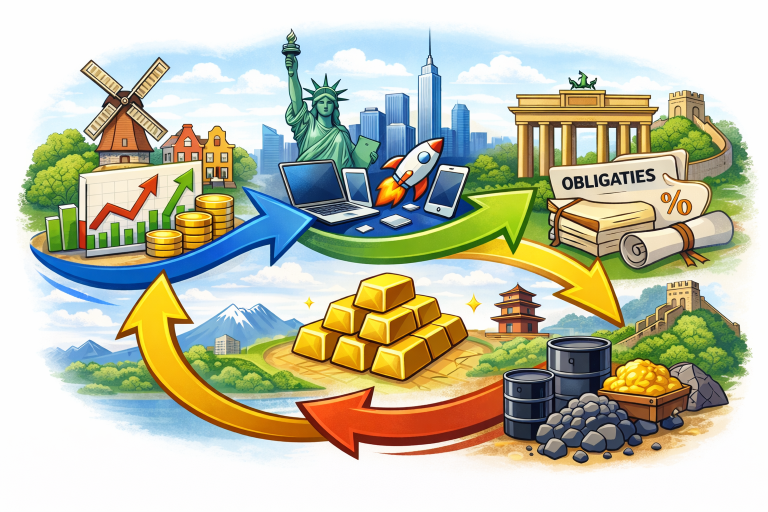
When you invest, you'll have a huge range or stocks, ETFs, bonds, and indexes available. All these stocks, ETFs, bonds, and indexes will also be available to you as a trader—if you choose the right broker. Plus, traders can easily trade and speculate on forex markets (currency exchange rates), which is more complex for investors.

Leverage
One advantage or trading is that the broker you trade through almost always orfers leverage. This means your position gets amplified. With 1:30 leverage, every 1% movement suddenly becomes a 30% movement. This lets you prorit from small movements without keeping positions open for years. You can read more about this in our section on what trading is. Just keep in mind—leverage can work against you too, and you can rack up significant losses quickly.
Learning to Trade
Want to learn to trade? You can—and it's really not as difficult as it sounds if you automate everything. Learn more on our courses page.