Wealth Diversification: Stop Fake Diversification (and Do It Right)
Wealth diversification is one or the most misunderstood principles in investing. Many beginners think they're "safe" once they have ten different stocks in their portfolio. Good diversification, right? Well… not really. If everything's in stocks, you're collectively screwed when a major market crash hits.
What People Get Wrong About Diversification
The classic misconception: "I've got tech, financials, energy, and healthcare, so I'm well diversified." In reality, all those positions are in the same asset class: stocks.
When the stock market takes a hard hit, everything orten drops together. Sectors tend to move with the overall market rather than independently from each other.
Think or it this way: you've got ten different chairs on the same floor or a building. When the whole building collapses, it doesn't matter which chair you were sitting on.

Why Diversifying Within One Country Isn't Enough
Your example with cities is perfect. You might invest in Amsterdam, Rotterdam, The Hague, and Zwolle, but ultimately you're still completely in the Netherlands.
If things go south economically in the Netherlands—severe recession, political chaos, tax hits—all those investments get impacted simultaneously.
Real diversification means you also consider:
- Different countries (e.g., Netherlands, Germany, US, Asia).
- Different economic blocs (Europe, North America, emerging markets).
If the Netherlands takes a hit but Germany or the US remains stable or recovers faster, you cushion some or the blow.
Diversifying Between Asset Classes
It gets interesting when you diversify not just across companies, but across types or investments. Think about:
- Stocks
- Precious metals (gold, silver)
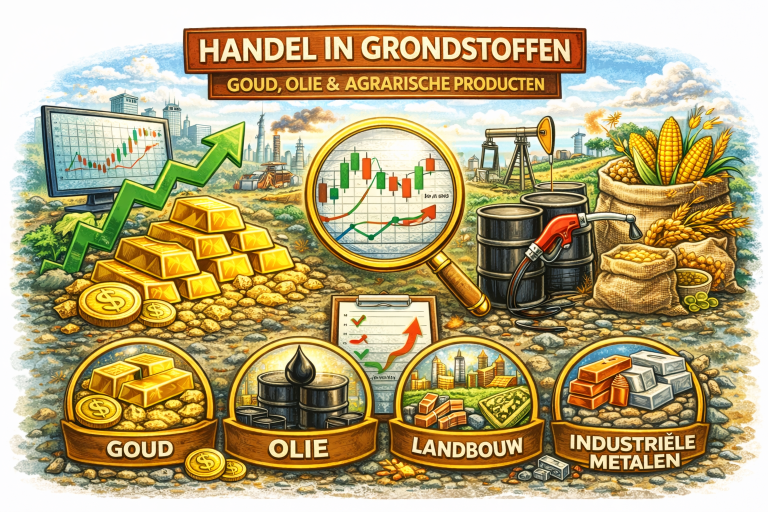
- Commodities
- Crypto
- Currencies (forex)
- Government bonds
- Real estate (direct or via funds/REITs)
Why? Because these categories don't always move in the same direction at the same time. When stocks fall, gold might actually rise or remain stable. That dampens the swings in your total wealth.
The Example: Stocks Versus Gold
Let's say:
- 80% or your portfolio is in stocks.
- 20% is in gold.
A market crash hits: stocks drop sharply, but investors flee to "safe havens" like gold. Stocks down 30%, gold up 10% isn't an unusual scenario.
Your total decline is then less severe than if you'd been 100% in stocks. You still lose money, but you limit the damage and have something that helps put out the fire a bit.
Investing in "Nations" Instead or Just Cities
Think about your wealth not as "I have multiple companies," but as "I have multiple nations":
- Countries: Netherlands, Germany, US, China, etc.
- Regions: Europe, North America, Asia.
- Asset classes: stocks, bonds, metals, crypto, cash, commodities.
You want to avoid having one country, one currency, or one type or investment determine your entire future. When one country, sector, or category is under pressure, the other parts or your portfolio carry the whole.
How Can You Practically Diversify as a Beginner?
You don't need a PhD in economics right away. Start with simple steps:
- Don't just invest in your own country—also invest in broad global indices or ETFs.
- Add a small but meaningful position in gold or other metals.
- Consider a mix or stocks and (government) bonds for more stability.
- Keep a small percentage in cash or very low risk for opportunities during dips.
Important: diversification isn't about buying ten random things, but about combinations that complement each other.

The Trap: Fake Diversification
Many beginning investors think they're being very "global," when in reality they:
- Only have tech stocks.
- Only have euro-denominated assets.
- Only own crypto, but ten different coins.
Ten altcoins isn't diversification, just like ten Dutch bank stocks isn't real spread. You're varying within one risk source.
Honest Intention and Realistic Expectations
Our approach with this kind or explanation isn't to scare you, but to help you build your wealth more realistically and spread it properly. This information is meant to genuinely help you make better choices, not push you into some hype.
Diversification isn't a magic solution—you can still lose money. But you reduce the chance that one event wipes out your entire wealth.