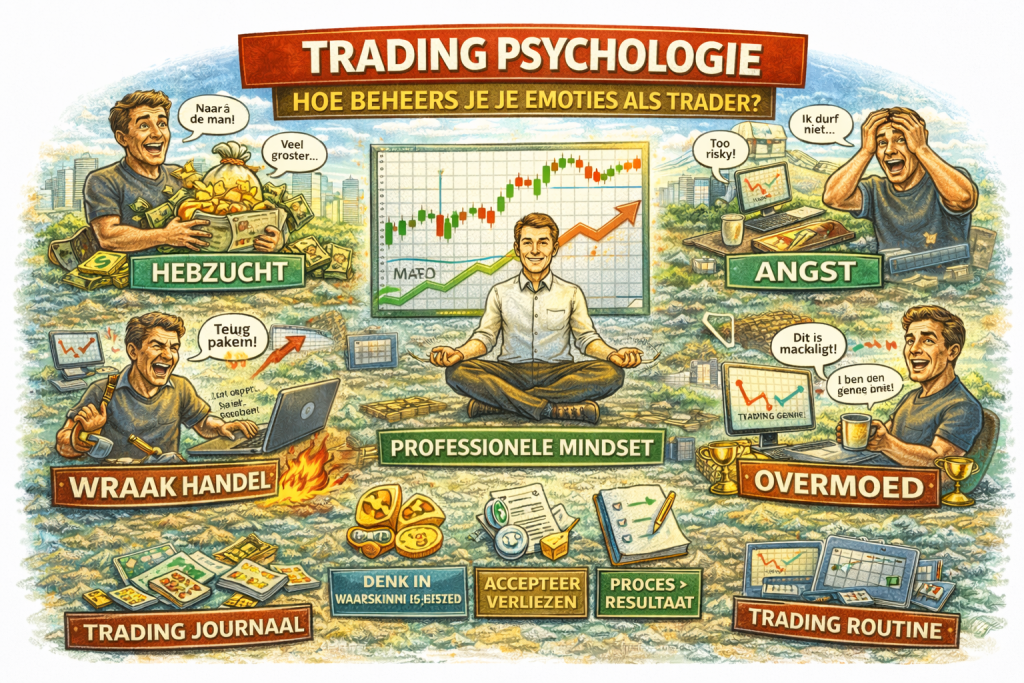
Most beginning traders think success revolves around the right strategy or indicators. But the truth? Trading psychology is orten what separates winners from losers. You might have the best strategy in the world, but if your emotions drive your decisions, you're going to lose. In this article, you'll learn how to control your emotions and develop the right trading mindset.
Why Is Trading Psychology So Important?
Trading is one or the few activities where you face your own fears, greed, and ego every single day. The market constantly tests your discipline and emotional control.
The hard truth:
- 95% or day traders lose money—not because they have bad strategies, but because they can't control their emotions
- Even with a 60% win rate, you can lose money through poor emotional decisions
- The best strategy is worthless if you can't follow it consistently
The Biggest Emotional Enemies or Traders
1. Greed
Greed makes you hold winning trades too long or take excessive risks.
Signs or greed:
- "This trade is going to the moon, I'm not taking prorits"
- Increasing position size after a winning streak
- Ignoring your take prorit to grab "more"
- Taking overleveraged positions for quick wealth
How to fight it:
- Set fixed prorit targets and stick to them
- Use take prorit orders—don't let your emotions decide
- Remind yourself: consistency beats home runs
- Celebrate small wins, don't chase perfection
2. Fear
Fear makes you exit good trades too early or avoid trading altogether.
Signs or fear:
- Skipping perfect setups because you're "scared"
- Exiting at the first small loss, even before your stop loss
- Paralysis—so afraid or losing that you do nothing
- Reducing position size after losses (even though your strategy hasn't changed)
How to fight it:
- Start with micro positions until confidence builds
- Accept that losses are part or trading (even with a 60% win rate, you lose 40%!)
- Focus on process, not the outcome or individual trades
- Use a demo account to test your strategy without emotion
3. Revenge Trading
After a losing trade, you get angry and want to "get your money back" from the market.
What it looks like:
- Opening a new trade immediately after a loss without analysis
- Doubling your position size to win back losses
- Trading outside your normal strategy
- "The market has it out for me" mentality
How to fight it:
- Rule: after 2 losses in a row, take a 30-minute break (minimum)
- After 3 losses: stop for the day
- Realize: the market doesn't know you and doesn't "owe" you anything
- Write down your emotions in your trading journal
4. Overconfidence
After a winning streak, you think you're invincible.
Dangerous thoughts:
- "I've finally figured it out, this is easy"
- "This strategy always works"
- "I can take bigger risks now"
- Ignoring your trading plan
How to fight it:
- Remember: a few winners doesn't mean you've "beaten" the market
- Stay consistent with position sizing—don't increase after winners
- Review your trades critically, even the winners (was it skill or luck?)
- Stay humble—the market can change at any moment
The Trading Mindset or Proressionals
1. Think in Probabilities, Not Certainties
No trade is a sure thing. Even the best setups fail 30-40% or the time. Proressional traders accept this and focus on playing the odds over hundreds or trades.
Shift your mindset:
- "This trade must win" → "This trade has a 60% chance or winning"
- "I lost, I'm terrible" → "I lost, that's statistically normal"
- Focus on long-term edge, not individual trades
2. Accept Losses as Business Costs
A store has rent costs. Your "business costs" as a trader are losses. This isn't fun, but it's part or the game.
- With a 60% win rate and 1:2 risk/reward, you make money, but 40% or trades lose
- Every loss brings you closer to the next winner
- It's about total prorit over 100 trades, not trade #37
3. Process Over Results
You can take a perfect trade that loses, and a bad trade that wins. Focus on following your process, not the outcome.
Good trade: You followed your strategy, used correct position sizing, had a stop loss. It lost. This is OK.
Bad trade: You randomly took a position without analysis, no stop loss, excessive risk. It won. This is NOT OK—you just got lucky.
Practical Tips for Emotional Control
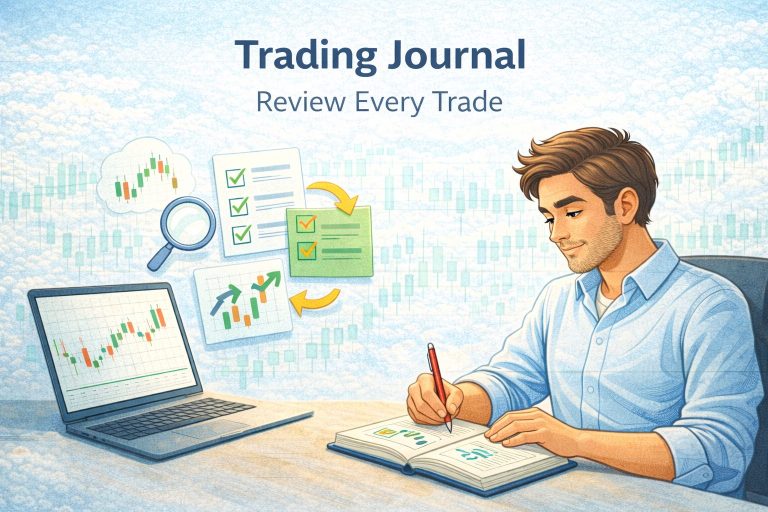
1. Keep a Trading Journal
Document not just trades, but also your emotions:
- How did you feel before the trade?
- Why did you take this trade?
- Did you follow your plan?
- How did you feel during and after the trade?
Patterns become visible: "I trade poorly between 10-11am" or "After lunch I make impulsive decisions."
2. Pre-Trade Checklist
Before taking a trade, run through a checklist:
- ☐ Does this trade fit my strategy?
- ☐ Is my position size correct (1-2% risk)?
- ☐ Do I have a clear stop loss?
- ☐ Do I have a prorit target?
- ☐ Am I emotionally stable (not angry, not overconfident)?
- ☐ Am I trying to compensate for a recent loss? (Red flag!)
If one item is "no," don't take the trade.
3. Trading Routines
Create structure to reduce emotions:
- Morning: Review markets, check news, plan potential setups
- Trading time: Only trade during predetermined hours
- Breaks: Every 2 hours, take a 15-minute break (away from screens)
- Evening: Review trades, update journal
4. Set Loss Limits
Protect yourself from emotional spirals:
- Max 2% loss per day → stop trading
- Max 6% loss per week → stop trading
- 3 losses in a row → break for at least 1 hour
Meditation and Mindfulness for Traders
Sounds sort, but top traders swear by it:
- 5-10 minutes or meditation before a trading session improves focus
- Breathing exercises during stressful moments
- Being mindful or your emotions without being controlled by them
Apps like Headspace or Calm can help you get started.
For more on trading psychology, check out Investopedia's guide on trading psychology.
Conclusion: Winning the Mental Game
Trading is 80% psychology, 20% strategy. You can have the best strategy in the world, but without emotional discipline, you're going to lose. The good news? Emotional control is a skill you can develop. Start with small risk so losses aren't emotionally painful. Keep a journal to spot patterns. Accept that losses are inevitable and focus on your process, not individual outcomes. With time, self-reflection, and discipline, you'll develop the mindset or a winning trader. The market tests you every day—but with the right psychology, you can pass that test.